01 / 08
Nursery
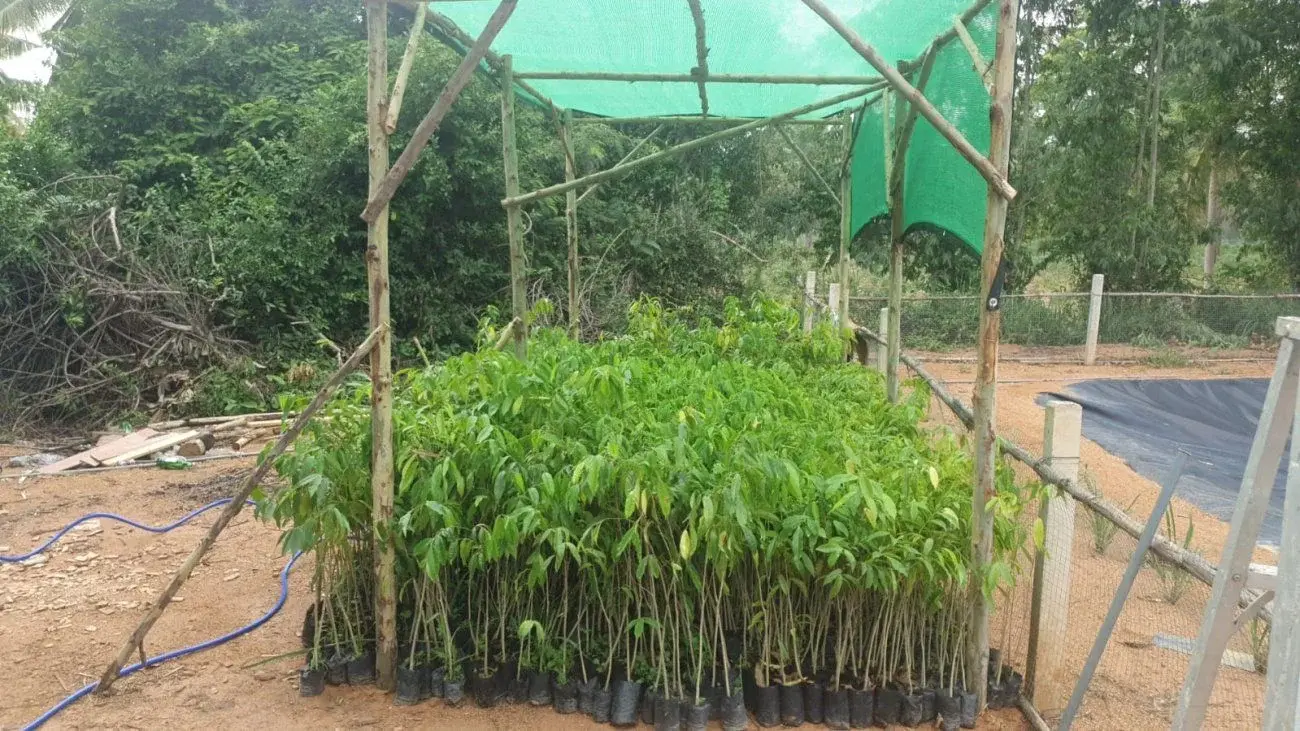
Seedlings are raised in our own nursery, under shade netting, until they are strong enough for the field.


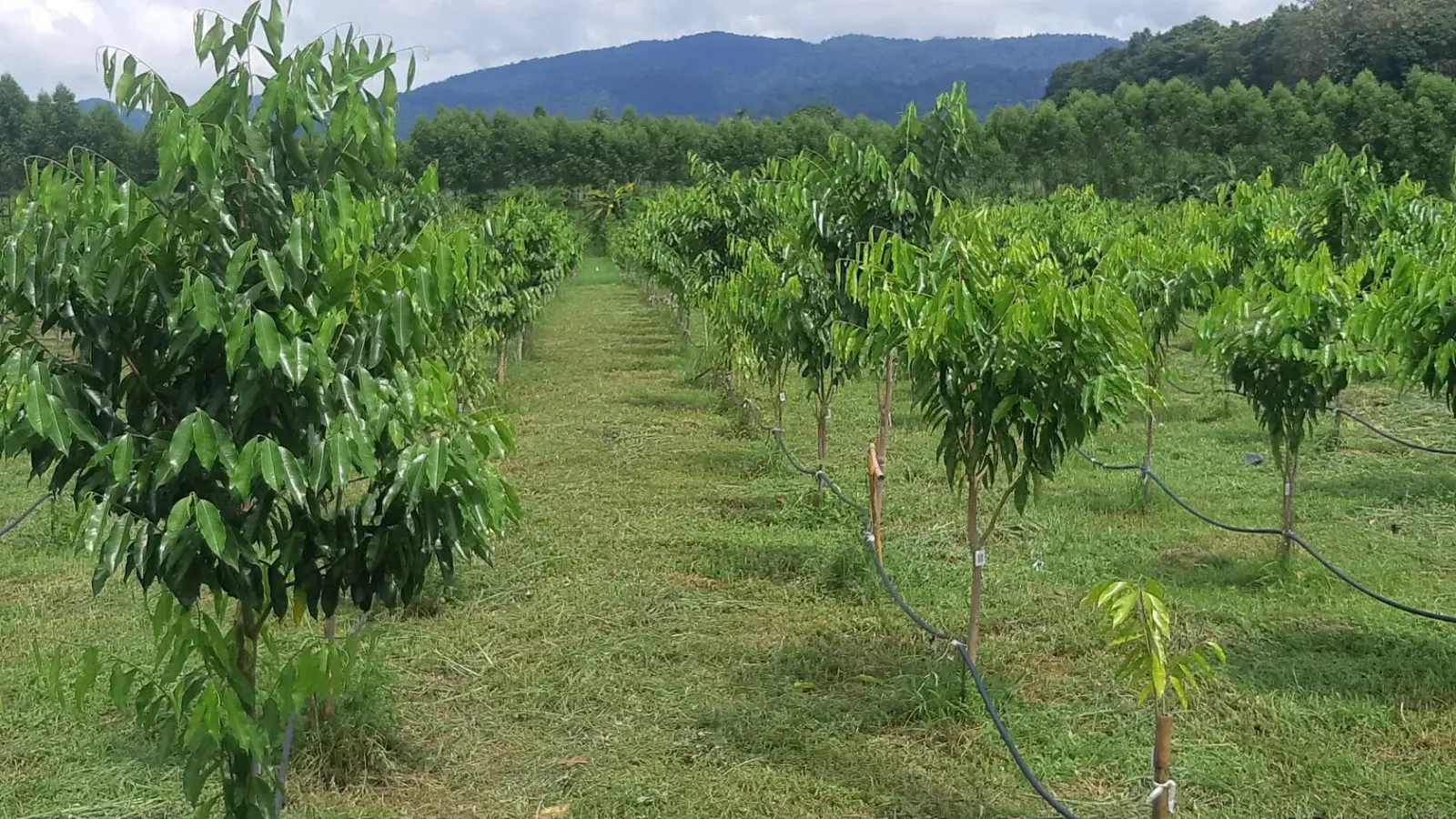
We grow agarwood the slow way — on living, permaculture land in Chon Buri, where the trees are given the time they need.
Agarwood forms deep inside the Aquilaria tree as a natural response, slowly turning pale wood into dark, fragrant heartwood. Distilled, it becomes oud oil — one of the most treasured natural materials in perfumery.
Agarwood Eco Capital is dedicated to producing the world's best quality sustainable agarwood using permaculture principles, and to building a reliable supply chain from seedling to finished product while giving back to the local community.
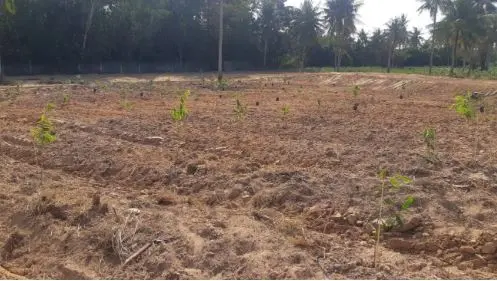
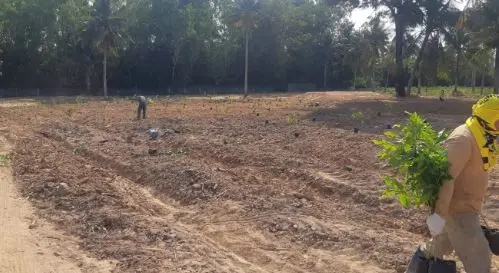
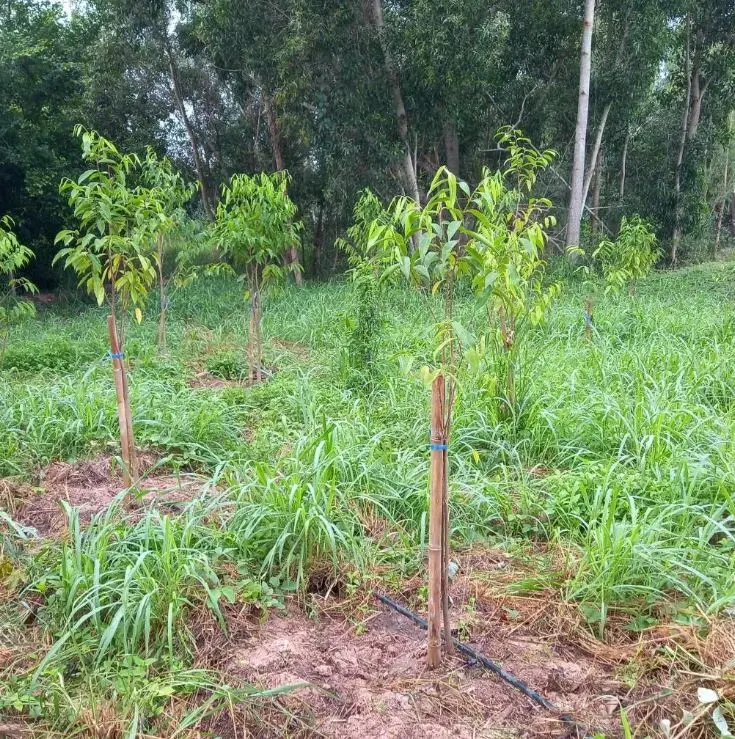
Land prepared by hand, seedlings raised in our own nursery, and rows of Aquilaria growing alongside the plants that keep the soil alive.
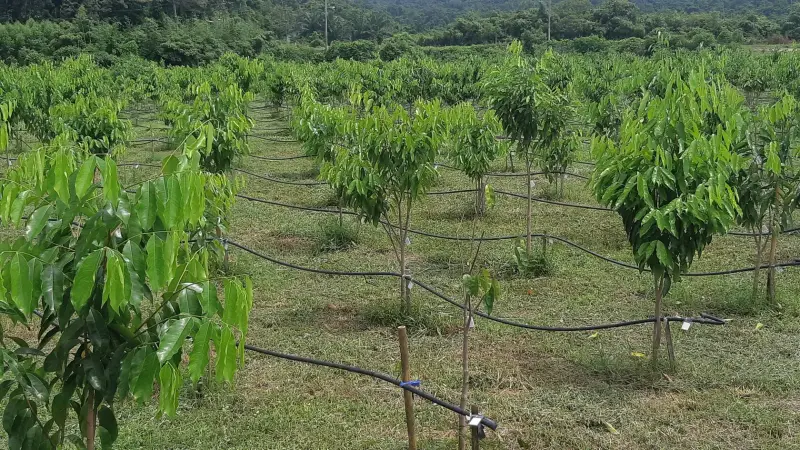
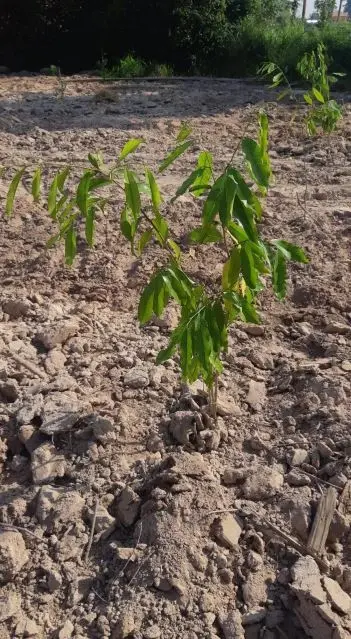
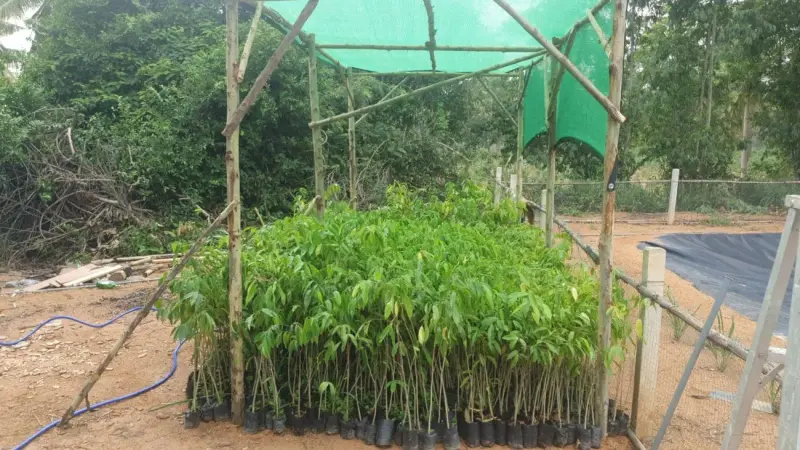
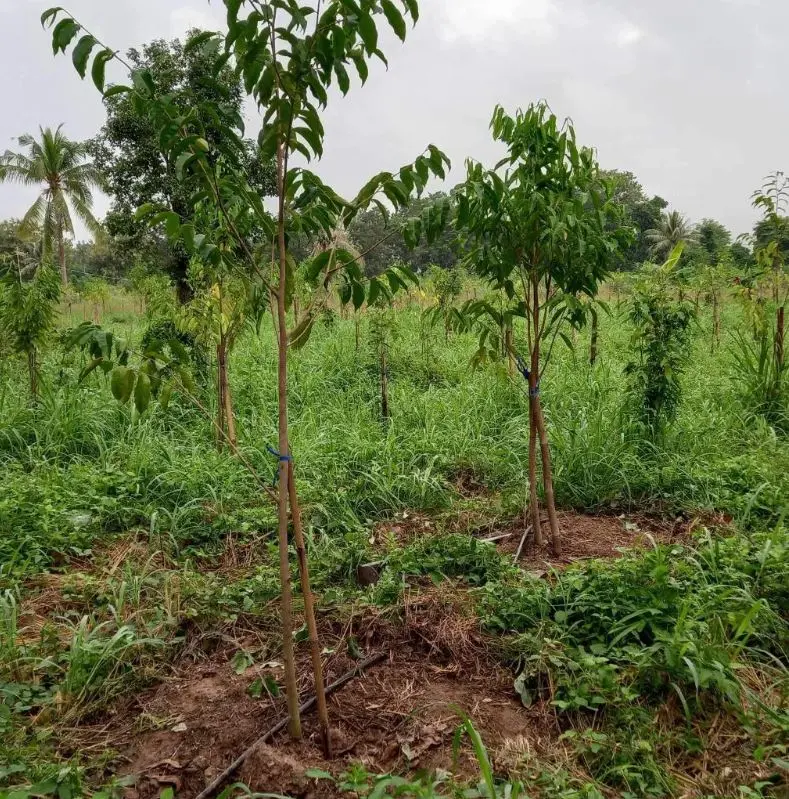
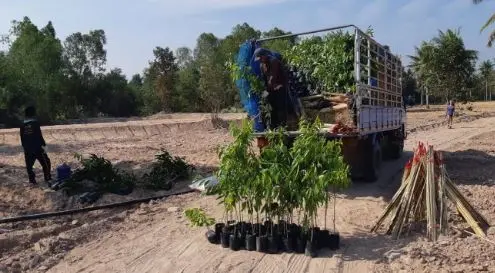
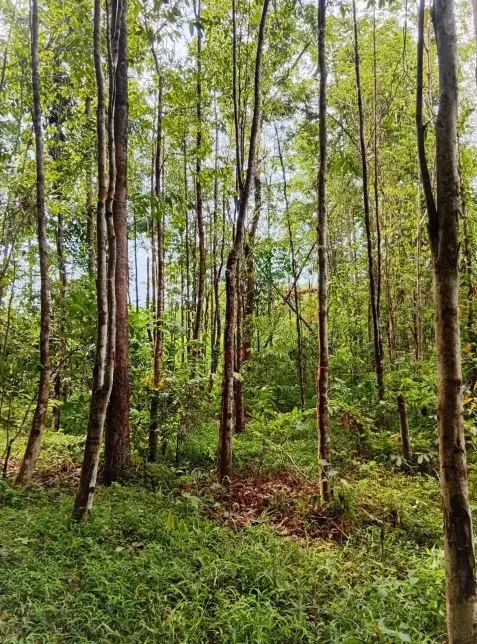
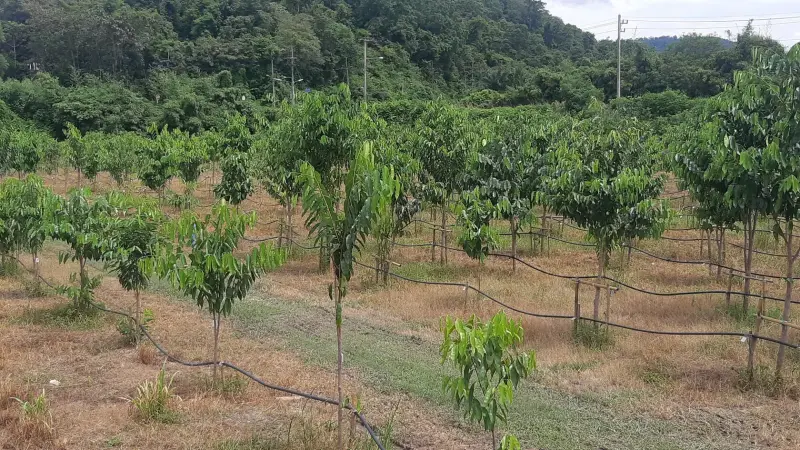
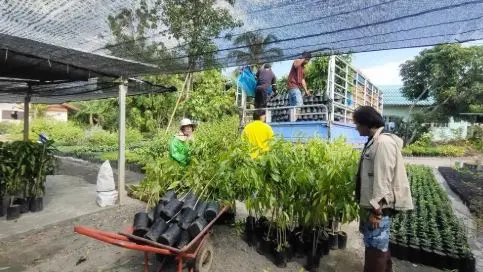
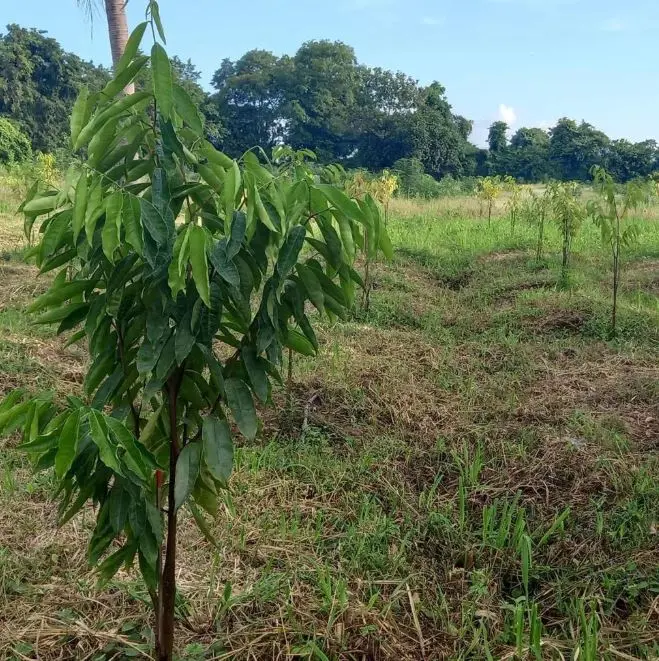
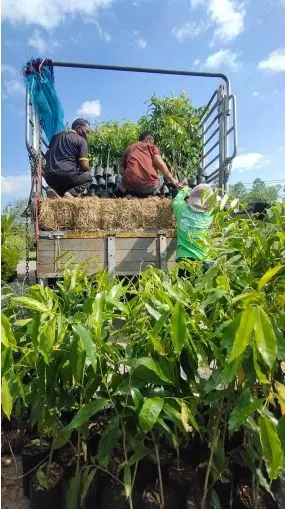
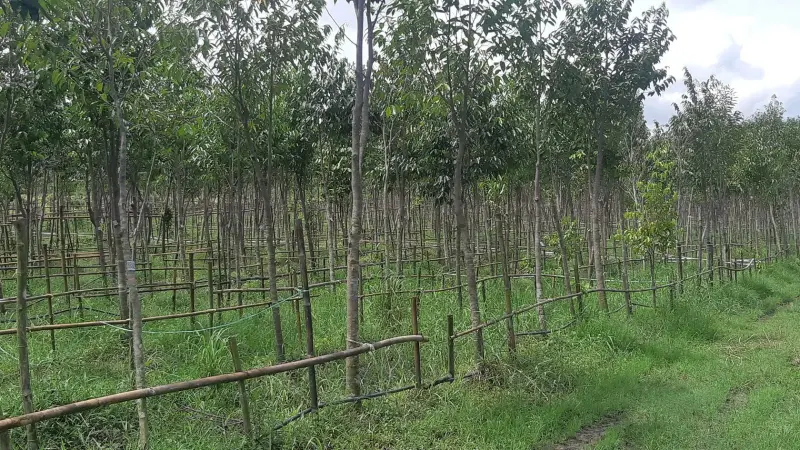
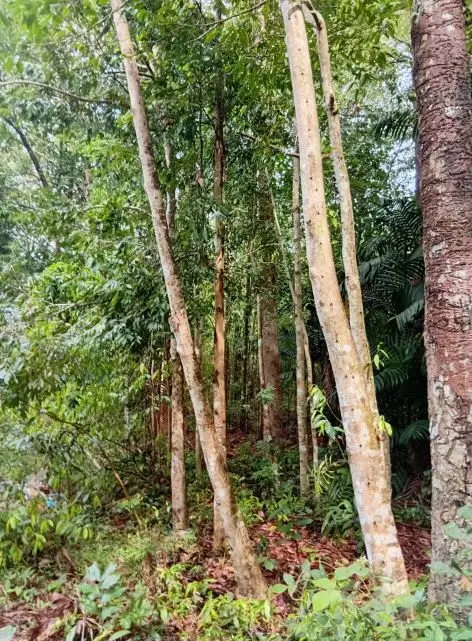
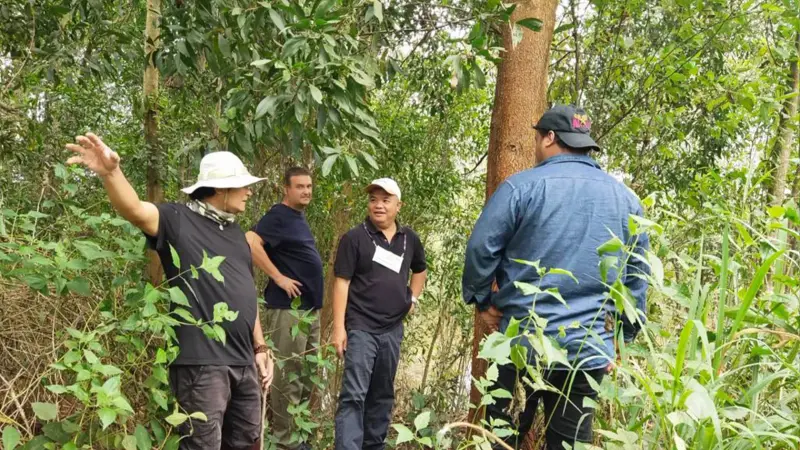
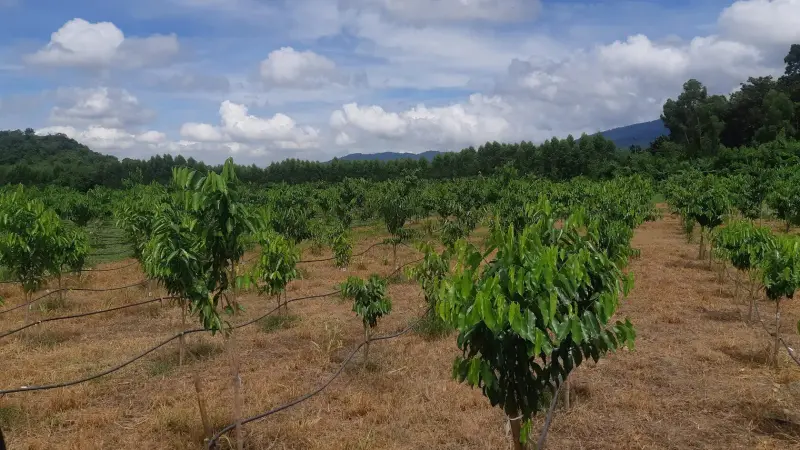
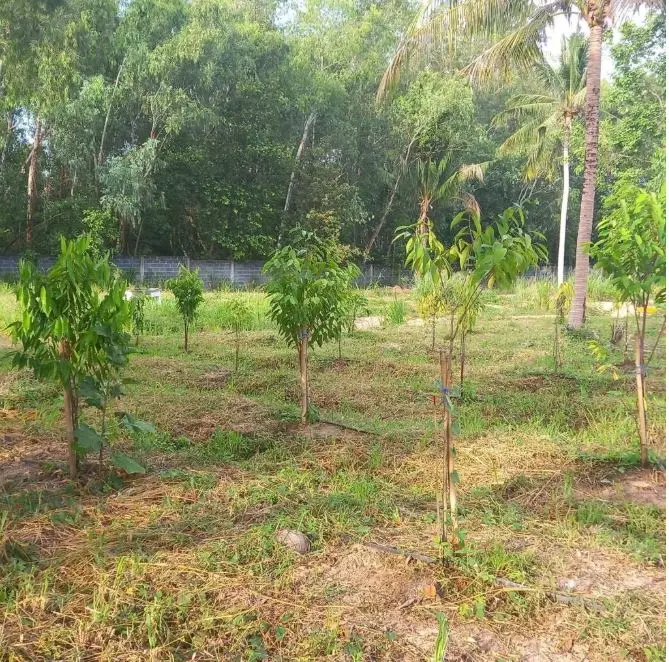
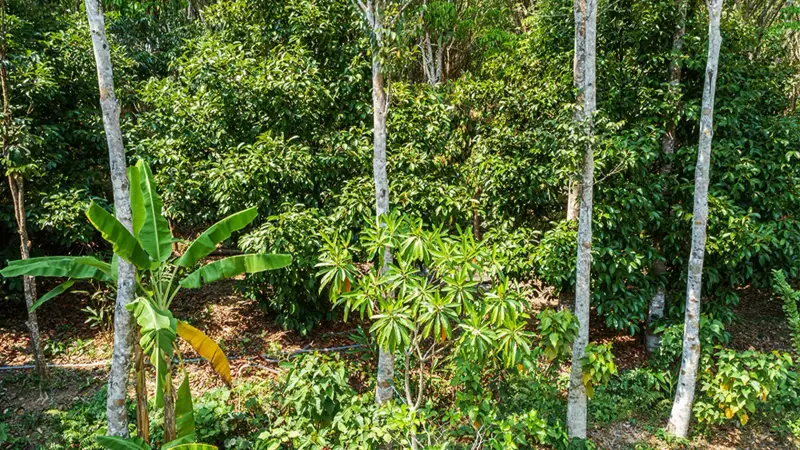
All photographs on this site are of our own plantations and nursery.
Seedlings are raised in our own nursery, under shade netting, until they are strong enough for the field.
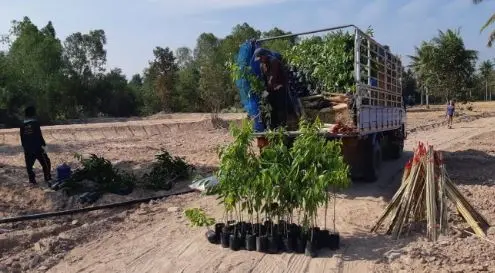
Saplings are set out on land prepared by hand, spaced to leave room for the plants that share the soil with them.
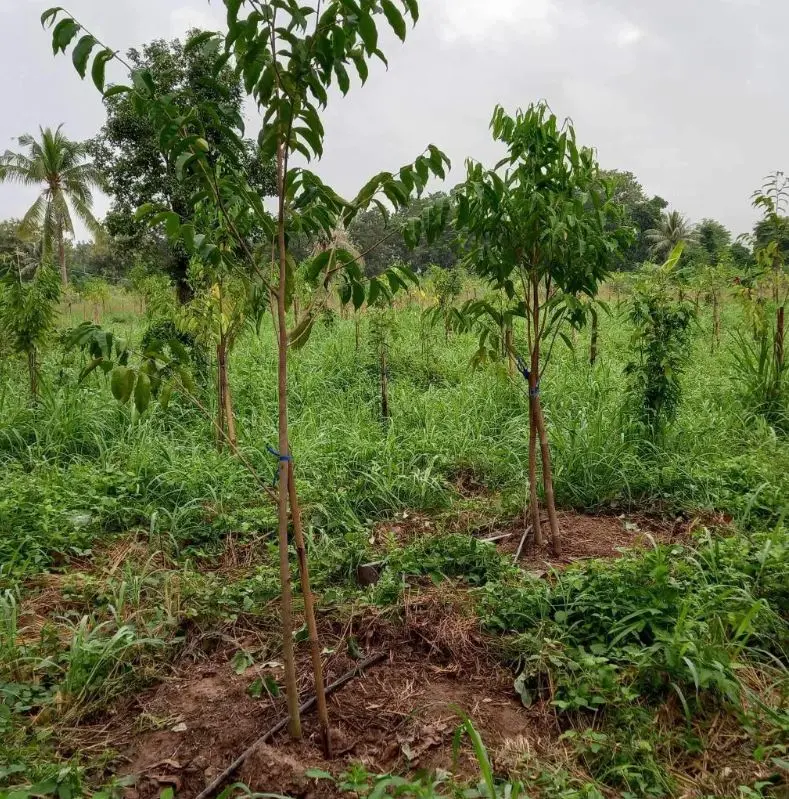
For years the trees grow among cover crops and native plants. Compost, mulch and water held on the land keep them healthy without synthetic chemicals.
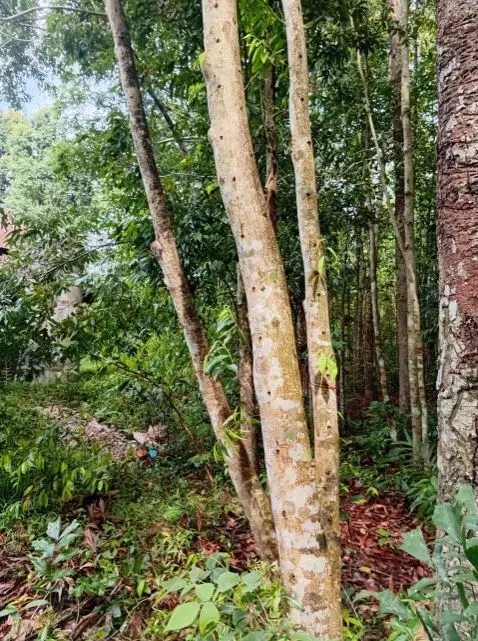
Specialists inoculate the trees, timing the work to climate and environmental conditions. As resin forms inside the trunk, pale wood slowly darkens into fragrant heartwood — a change measured in years.
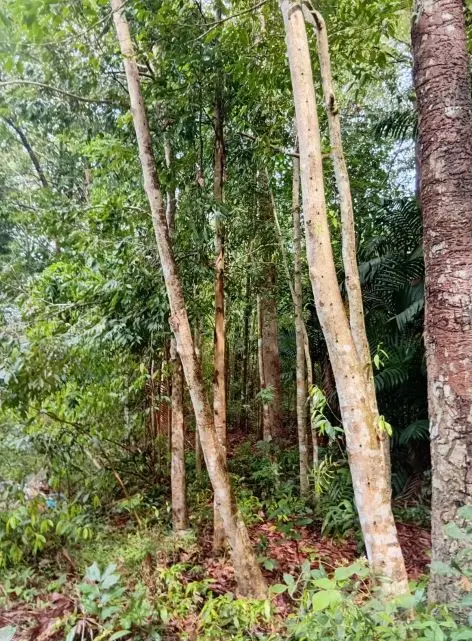
Agarwood is harvested once the heartwood has developed, and the resinous wood is separated from the pale wood.
Resinous wood is cut into chips and graded. Warmed on charcoal, it releases agarwood's deep, unmistakable fragrance.
Distilled, the resinous wood becomes oud oil — a treasured ingredient in fine fragrance and attar.
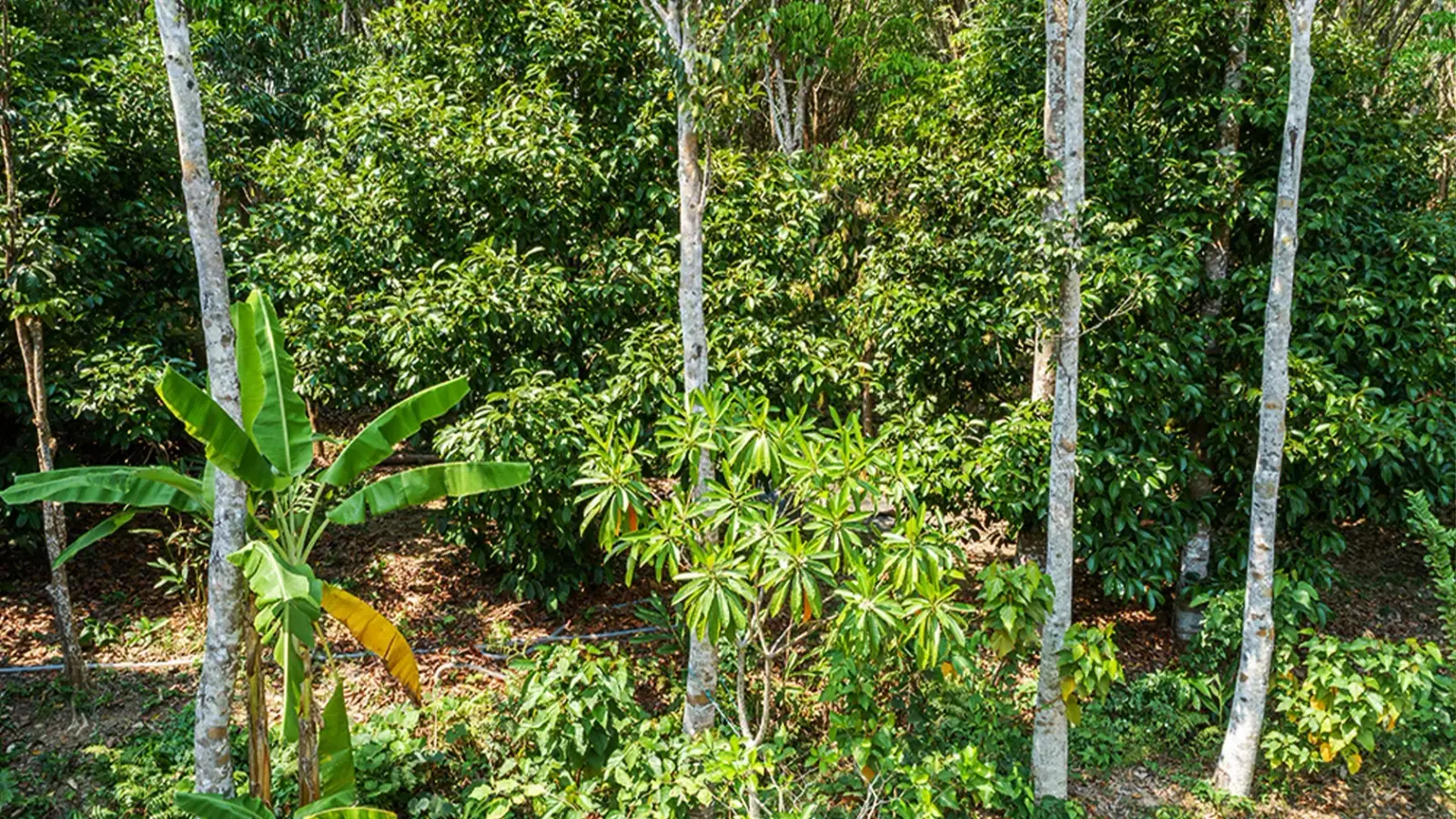
Agarwood leaves can also be dried for tea.
Organic agriculture sustains the health of soils, ecosystems and people. We rely on ecological processes and biodiversity rather than synthetic inputs.
Compost, green manures and cover crops build soil structure and feed the microbes that keep the trees healthy.
A biodiverse plantation, beneficial insects and plant-based repellents keep pests in check without synthetic chemicals.
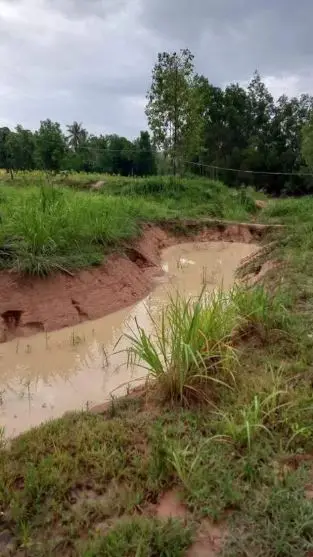
Ponds and drip lines keep water where the trees need it, through dry months and wet.
Agarwood's character deepens as resin develops over years. Oud oil is a key ingredient in many of the world's finest fragrances, and supply of high-grade natural agarwood remains limited.
| Form | Typical use |
|---|---|
| Oud oil | Fine fragrance and attar |
| Chips | Incense, burned on charcoal |
| Powder | Incense sticks and cones |
| Leaves | Agarwood leaf tea |
Charts are illustrative and show general market characteristics only. They are not data about Agarwood Eco Capital's plantations, and nothing on this website is an offer, a forecast or a promise of returns.
Our main plantation is in Chon Buri province on Thailand's eastern seaboard — about an hour's drive from Bangkok. We also own a site in Prachinburi with hundreds of wild agarwood trees, and work with partners in Malaysia, Bangladesh and Indonesia.
Chon Buri — on Thailand's eastern seaboard, an hour from Bangkok. Home of our main plantation.
Part of a long-standing network in artisanal oud and natural perfumery.